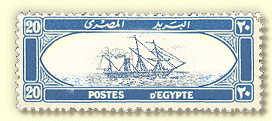
Suez Canal Company Stamps
Denominations: Centimes
Only Four Denominations Issued (1c, 5c, 20c, 40c)
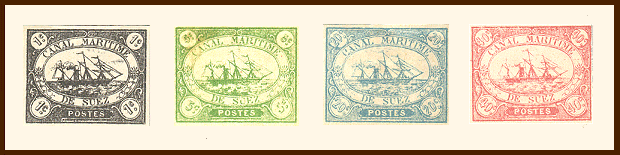
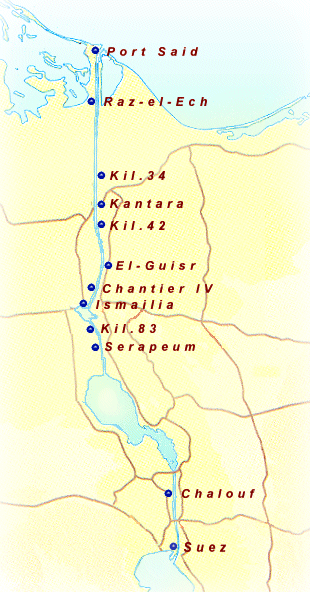
In 1859 the Compagnie Universelle du Canal Maritime de Suez set up its own postal system to convey administrative mail between its work sites and its offices in Alexandria, Port Said, Ismailia and Suez. Later, in 1860, it formed an agreement with the Posta Europea for the conveyance of its mail to the nearest Posta Europea office.
This arrangement ran until 1865. In November 1867, to cover costs, it was decided to introduce a charge for private mail, effective July 1, 1868. The company ordered stamps from Paris (1, 5, 20 and 40 centimes), printed by lithography.
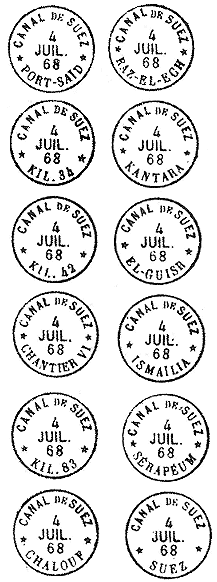
The stamps arrived late (July 1868), and company datestamps were also delayed, so stamps were often cancelled by pen or by French Post Office obliterators (e.g., "5129" lozenge at Port Said).
The Egyptian government, concerned about the infringement of its monopoly, took control on August 16, 1868. Thus, the stamps were valid for less than 40 days, making genuine usage extremely rare.
Map of the Canal & Handstamps
The Egyptian Takeover (Jan 1, 1865)
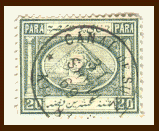
On taking over the canal service the Egyptian postal authorities used Egyptian stamps and introduced their own datestamps. In some cases, Egyptian stamps were cancelled by the company datestamps until new ones arrived.
This issue has been extensively forged. It is likely that there are more forgeries in the marketplace than genuine stamps. Forged postmarks on forged and genuine stamps are known. Genuine used stamps are extremely rare.
Reference: Boulad d'Humières, Ringström and Tester: Private Ship Letter Stamps of the World. Part 3. The Suez Canal Company.
Genuine vs. Forgeries
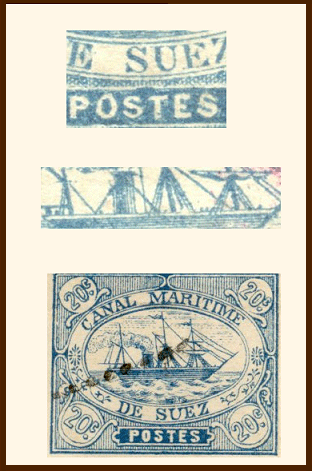
Careful examination is required. On genuine stamps (20c example):
- The space between "POSTES" and "DE SUEZ" is filled with both vertical and oblique lines of shading.
- On the ship: one passenger in bows, two between masts, one behind main mast.
- A spot of colour behind the funnel (rigging rail).
The lower stamp in the image is a crude forgery.
Rarities
Complete Sheets
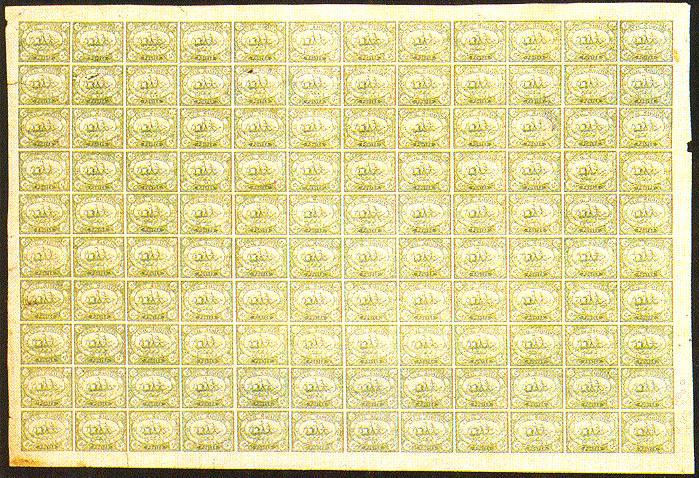
Only a few sheets exist. None known for 1c.
Genuine Covers
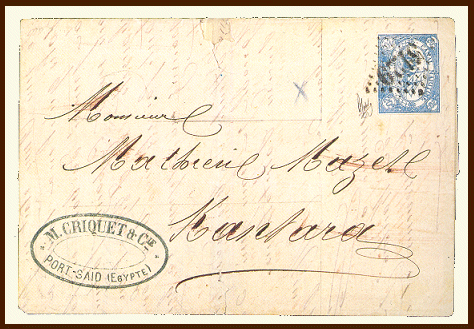
One of the approx. 21 known genuine covers.
